Defending Democracy: The Necessity of Human Journalism

Defending Democracy: The Necessity of Human Journalism

“To accept passively an unjust system is to cooperate with that system,” Martin Luther King Jr. once wrote. Today, as AI threatens to flood our information ecosystem with synthetic content, this warning resonates with new urgency. The question isn’t whether AI will replace journalism – it’s whether we’ll passively accept the degradation of our shared truth-seeking institutions. Let’s be clear: the fundamental role of journalism in democracy cannot be automated away. When Jürgen Habermas described the public sphere, he wasn’t envisioning a network of language models – he was describing the very human process of collective sense-making. This is why journalism, real journalism, will persist regardless of AI’s capabilities. ...

Digital Detox in progress

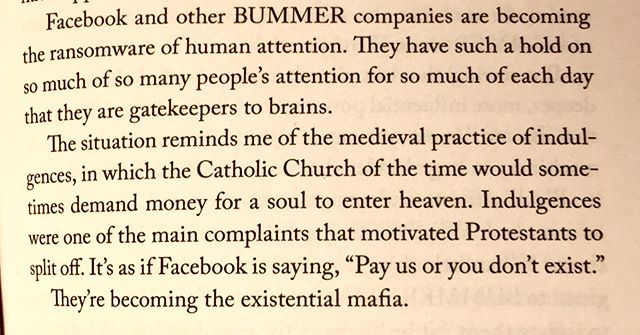
I have recently read Jaron Lanier’s newest book: Ten Arguments for Deleting Your Social Media Accounts Right Now (2018). It makes some great arguments for those who are in a position to do so to remove themselves from social media platforms. As a result I am exporting my data off of Facebook and Google, Instagram, and moving everything to my own blog. I highly recommend the book and would love to encourage and help others to move to a platform that gives them full control of the content they publish and the content that they consume. ...

#jaronlanier is right! #tenargumentsfordeletingyoursocialmediaaccountsrightnow #facebook #instagram #whatsapp #twitter

#jaronlanier is right! #tenargumentsfordeletingyoursocialmediaaccountsrightnow #facebook #instagram #whatsapp #twitter

#jaronlanier is right! #tenargumentsfordeletingyoursocialmediaaccountsrightnow #facebook #instagram #whatsapp #twitter

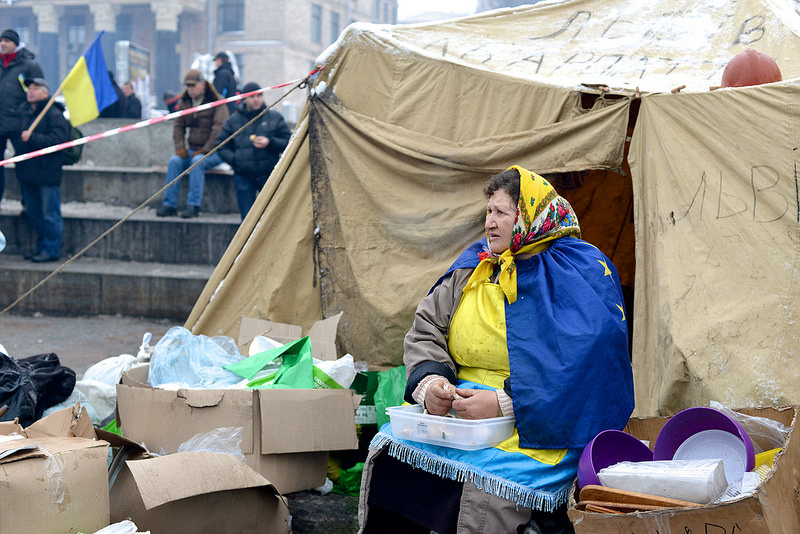
Ukrainian Revolution.

Ukrainian Revolution.

Protester plays on the roof of a burned up"Berkut" bus. The barricade across Hrushevskoho str. Kiev, 10.02.2014. ...

Where's the traffic on the Danube?

So I am living here in Vienna along the banks of the Danube, or the Donau, whatever you like to call it. Danube, New Danube, Old Danube Deutsch: Donau, Neue Donau, Alte Donau (Photo credit: Wikipedia) Topography of Europe, with Danube marked red (Photo credit: Wikipedia) Vienna is a great city, according to the recent results of the Mercer Quality of Living survey. But the Danube river is an under appreciated part of that quality of life. It has been greatly improved where it flows through Vienna. Vienna has the Danube Canal that curves through the city center and meets up with the river proper in the south east of the city. Additionally, the Austro-Hungarian government in the 19th century had the forethought to gouge a protective floodplain which would be further developed in the 80s to become the new Danube, leaving a 21 km long thread of an island, the Donauinsel, to split the old path off from the new flood stage path of the Danube. This narrow but very long island is essentially one single park which runs down the length of the city. It’s fantastic. Perfect for bike rides, swimming, concerts, running with your staghound, or anything else that requires open green space. But wait! There’s more! One section of the river is completely closed off and forms the old Danube, a man-made oxbow lake, which is also a public space but this one has private tennis courts, water slides, playgrounds, canoes, paddle boats, parks and some cute little garden houses all along it’s shores. This is where it seems most of Vienna goes when the weather gets hot. It is a big enough lake that I sometimes think it could support the entire population of the city if it chose to sunbath all at once. These are the two largest outdoor attractions within the Vienna city limits for water lovers. ...

Norman Mailer's The Castle In The Forest

Did a lot of walking yesterday. Perhaps I am spending too much time walking but it is the best way to pass the time while listening to an audiobook. I just finished listening to Norman Mailer’s “The Castle in the Forest”. “Der Waldschloss” was a term used in this fictional account, at the very least, by some of the jewish prisoners at some concentration camp during World War II. It was meant to be ironic. To say their home in the woods was not a prison but a castle was an attempt at preserving a bit of humor after having had all other luxuries taken from them. ...